+91 9816857058
query@drkumarspharma.com
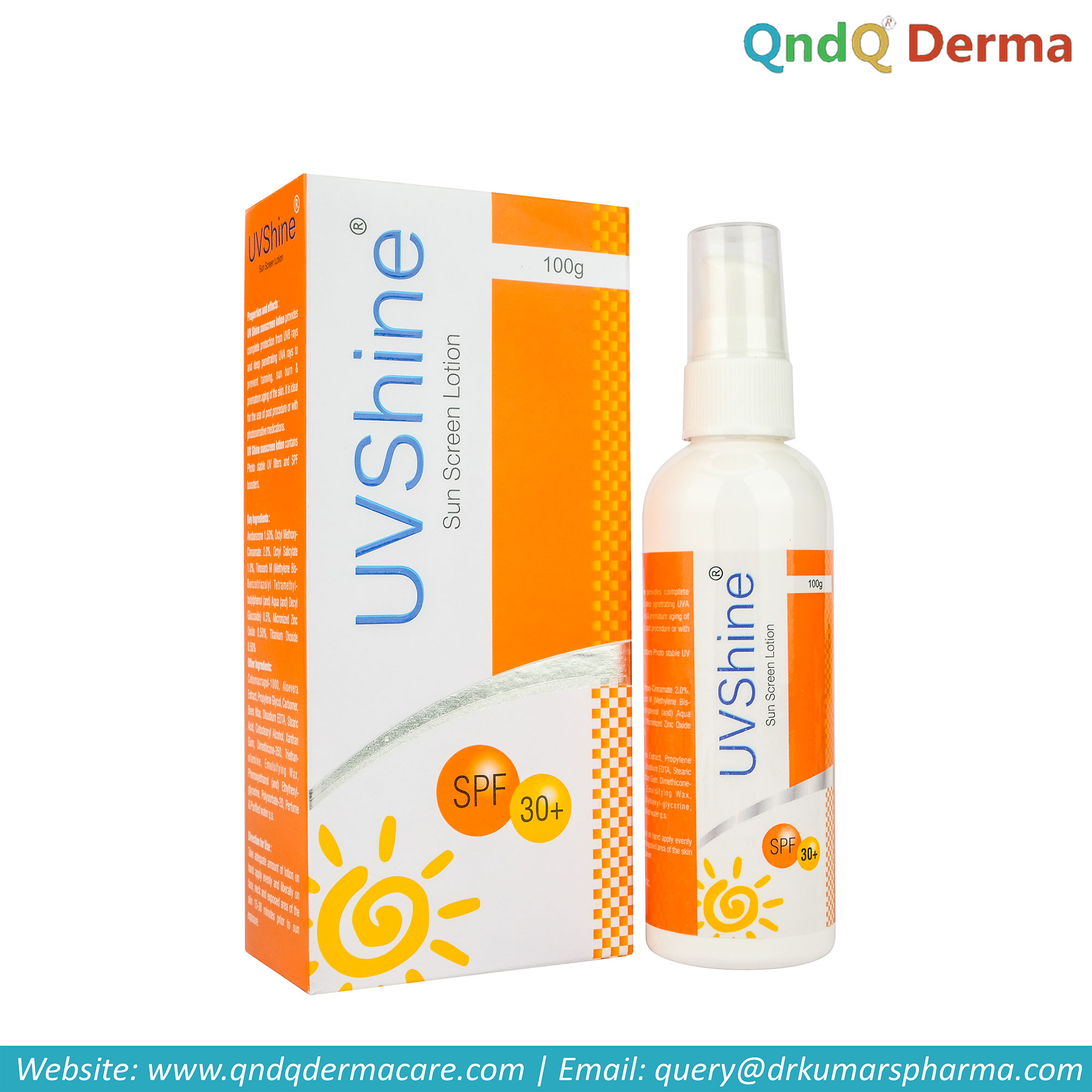
Sun Screen Lotion SPF 30+
Brand Name: Uv Shine 30+
Composition : Sun Screen Lotion SPF 30+
Packing : 100 gm
Price : Rs. 250
Franchise & Manufacturing EnquiryProduct Description
Sun Screen Lotion SPF 30+ - Sun damage is real. And it happens every single day, not just at the beach. Even on a cloudy day, up to 80–90% of UV rays still reach your skin. Over time, this leads to tanning, dark spots, premature aging, and increased risk of sun-related skin damage. Most people don't realize how much harm daily sun exposure causes. A good sunscreen is your first line of defense.This UV Shine 30+ is designed for daily use. It offers broad-spectrum protection against both UVA and UVB rays. UVA rays cause tanning and premature aging. UVB rays cause sunburn. SPF 30+ blocks up to 97% of UVB rays and keeps your skin protected through the day.
It is lightweight. It absorbs quickly. It does not leave a white cast or greasy residue. It's non-comedogenic, i.e., it will not clog the pores or produce breakouts. It's totally vegan and free of harsh chemicals. Beneficial for all types of skin, including oily and sensitive skin.
Made by QndQ Derma, a known name in derma-pharma manufacturing in India. The product is made in WHO-GMP-certified facilities. Quality is tested at every stage, from raw ingredients to final packaging.
Apply it every morning. Reapply every 3 hours when outdoors. Make sun protection a daily habit, not an afterthought.
Key Benefits of Non-Comedogenic Sunscreen
With the powerful properties of SPF 30+, this sunscreen lotion can do wonders when it comes to keeping the skin protected from sun rays. It gets penetrated into the skin quickly and provides a matte finish to the skin. It is 100% vegan sunscreen that is also free from any harsh chemicals. Here are the benefits of using UV Shine Sun Screen Lotion:- Protects the skin against harmful UV radiation.
- Reduces the appearance of wrinkles and fine lines.
- It absorbs, reflects, and vanishes the UV radiation on the skin.
- Keeps the skin hydrated all day long
- It encourages the generation of collagen and also minimizes UV damage and stimulates the growth of new skin cells.
- Even the skin tone.
Ingredients Used in Sunscreen for Oily Skin
It is one of the power sunscreens available in the Indian market. It is made with some of the best compounds that do not cause damage to the skin and provide long last positive results. The ingredients used to make this sunscreen lotion includes the following:- Phosphate
- Terminalia Ferdinandiana fruit extract
- Butyl Methoxydibenzoylmethane
- Phospholipids
- Citrus Aurantium Dulcis Peel Extract
- Ethylhexyl Methoxycinnamate
- Octocrylene
Directions Of Use
Every product needs to be applied in a certain manner and after following a set of guidelines to get the most out of it. The same is the case with UV Shine Sun Screen Lotion. To reap out maximum benefits from this sunscreen lotion, keep in mind the following directions:- Make sure to use it daily or as recommended by your dermatologists.
- Full the full product within the first 30 days of opening the bottle seal to get the maximum benefit.
- Always ensure to take a small quantity of the lotion and spread it evenly over the neck and face.
- Use it daily to get both outdoor and indoor protection from harmful rays.
- Make sure to apply this lotion 20-30 minutes before getting exposed to the sun.
- Also, reapply the lotion after every 3 hours for consistent protection.
Safety Tips to Keep Yourself Protected
Being one of the powerful sunscreen lotions available in the Indian market, it comes with the properties of SPF 30+ that can cause issues for the user as well if not used with proper care and taking precautions. So, here are the things that you need to remember to keep yourself protected from side effects:- Store this sunscreen lotion in a cool and a dry place away from the direct sunlight.
- Make sure to carefully read the entire label printer on the box before using this sunscreen lotion.
- Avoid any contact with the eyes. In case of contact, immediately rinse it off with water if irritation occurs.
- Make sure to keep this product out of reach of the children.
- Do not use it to treat and cure any skin disease.
- Contact your dermatologists before starting using this product.
Frequently Asked Questions
Q1- Is SPF 30 sunscreen enough for Indian weather?
A- SPF 30 is generally sufficient for daily, low-exposure, or indoor activities in India. It also blocks 97% of UVB rays. However, because of India's high UV index (11+), sweat, and humidity, SPF 50 is recommended.
Q2- Can SPF 30 prevent tanning completely?
A- No, SPF 30 cannot prevent tanning completely. A small percentage of UV rays still penetrate the skin, and UVA rays, which causes tanning, can still trigger melanin production, leading to a slight tan over time.
Q3- Is SPF 30 good for oily or acne-prone skin?
A- If your sunscreen is non-comedogenic, oil-free, and gel-based, then SPF 30 sunscreen will be good. Look for ingredients like zinc oxide and titanium dioxide, as they are less irritating.
Q4- What’s the difference between SPF 30 and SPF 50 sunscreen?
A- SPF 30 is generally fine for everyday, low-exposure, or indoor-focused days. SPF 50 is better for beaches, high-altitude, or long outdoor hours.
Q5- Does SPF 30 protect from both UVA and UVB rays?
A- Yes, an SPF 30 sunscreen protects against both UVA and UVB rays, but only if the label specifically says "Broad Spectrum."
Q6- Can SPF 30 cause pimples or breakouts?
A- Yes, it can cause it if it contains heavy, comedogenic ingredients that clog pores, such as oils or silicones. While sunscreen is essential, formulas that are too thick or not properly washed off can trap dirt and sebum, leading to acne.
Q7- Do I need sunscreen if it’s cloudy or raining?
A- Up to 80% to 90% of harmful UV radiation can penetrate clouds, causing skin damage, premature aging, and tanning. You should wear sunscreen even when it
Q8- Why does my skin still get darker even after using SPF 30?
A- Skin often darkens despite using SPF 30 due to insufficient application, missing spots, or using a formula that isn't broad-spectrum. SPF 30 only filters 97% of UVB rays; some rays still penetrate to trigger melanin production.
Contact Us
Important Links

Related Products